


Stape.io vs LeadJourney — Why marketers choose a full attribution platform over hosted sGTM
Stape.io provides hosted server-side Google Tag Manager — quality infrastructure for developers and technical marketers who want raw control. LeadJourney bundles that same server-side capability with multi-touch attribution, AI search engine tracking, CRM-to-revenue mapping, and the Atlas AI analyst — so your marketing team gets answers, not just pipes. Different tools for different jobs.


LeadJourney vs Stape.io — Infrastructure vs Full Platform
Stape gives you the server-side pipes. LeadJourney bundles those pipes with attribution, AI tracking, and reporting. Different layers of the marketing stack.
| Features | | Stape.io |
|---|---|---|
| Server-side data delivery | Server-side tracking built-in | Hosted sGTM containers |
| Time to first insight | Live in 21 minutes — no developer | Days to weeks (DIY config) |
| Out-of-the-box reporting | Pre-built attribution dashboards | No dashboards — build your own |
| AI search engine tracking | Native AI search engine tracking | Not supported |
| Multi-touch attribution | Built-in multi-touch attribution | DIY in BigQuery or other tool |
| CRM revenue connection | CRM-to-ads revenue sync built-in | DIY via custom tags |
| Lead-level drill-down | Click into every lead's full journey | Raw events only |
| AI-powered insights | Atlas — plain-language AI analyst | No analyst layer |
| Pricing model | All-in flat pricing per workspace | Pay per request volume — scales with traffic |
| Who can set it up | Marketing team handles entire setup | Developer or technical marketer required |
Why Marketers Choose LeadJourney Over Stape
Multi-Touch Attribution Built-In
Multi-touch attribution out of the box — no need for BigQuery, custom dashboards, or attribution math in a separate tool
AI Search Engine Tracking
Track Claude, ChatGPT, Perplexity, Copilot & more as distinct sources — Stape can't see AI engines as separate channels
CRM Revenue Connection
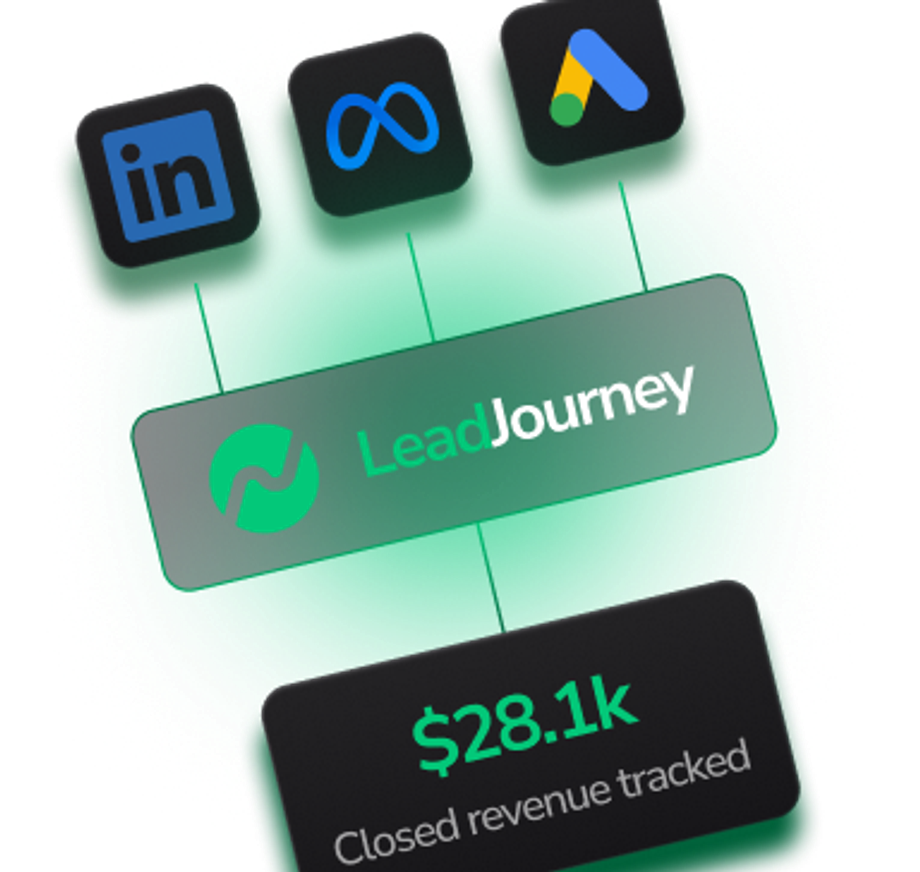
Native CRM-to-ads sync — send real revenue back to Meta, Google, LinkedIn & Bing automatically
Lead-Level Customer Journey
Click into any lead and see every touchpoint — every ad click, every CRM stage, every euro of revenue
Ready-to-Use Reports
Pre-built reports for traffic channels, campaigns, leads, landing pages — ready out of the box, no SQL required
Stape.io vs LeadJourney —
Your Questions Answered
Get answers to commonly asked questions.
Didn’t find the answer you were looking for?
Our team is here to help! Reach out to us and we’ll be happy to answer any questions about LeadJourney.
Stape.io is hosted server-side Google Tag Manager — it's infrastructure that lets you run a Google Tag Manager Server container in the cloud. You still need to configure GA4 events, Meta CAPI, Google Ads conversions, and any attribution dashboards yourself. LeadJourney is a full attribution platform: server-side tracking is included, plus multi-touch attribution, AI search tracking, CRM revenue connection, dashboards, reports, and the Atlas AI analyst — all in one tool, configured for you. Stape is a layer; LeadJourney is the stack.
Stape requires you to build a server-side GTM container, configure each ad platform's CAPI tag, set up event mapping, build attribution dashboards in Looker Studio or BigQuery, and maintain it all over time. Most teams need a developer or experienced GTM specialist for the initial setup — plan for days to weeks. LeadJourney handles all of that automatically: install one script, connect ad platforms and CRM, you're live in 21 minutes. No GTM expertise required.
Yes — Stape gives you raw server-side data flowing to ad platforms, but it doesn't tell you which campaigns are working, what your real ROAS is, or which leads turned into revenue. You'd still need to build dashboards in Looker Studio or BigQuery, do the attribution math yourself, and connect your CRM separately. With LeadJourney, the dashboards, attribution, and CRM revenue are all built in.
Stape is great if you have a developer or technical marketer, want full control over every event tag, and need to support specific custom server-side use cases (custom transformations, tag sequencing, etc.). LeadJourney is better if you're a marketing team that wants attribution outcomes — not infrastructure to manage. Some agencies use both: Stape for client sites that need bespoke server-side logic, LeadJourney for the attribution and reporting layer.
LeadJourney's pricing is flat per workspace — no per-request fees, no surprise bills during traffic spikes. Stape charges based on request volume sent to your sGTM container, which can scale unpredictably. For high-traffic sites, LeadJourney's pricing is usually more predictable and often cheaper at scale.
Yes. If you're already on Stape, you can keep your sGTM setup for any custom use cases and use LeadJourney for attribution and reporting on top — they don't conflict. Most teams who try both either keep them in parallel for a transition period or eventually consolidate onto LeadJourney once they realize the sGTM-specific work was unnecessary for their use case.
Stape Gives You Pipes.
LeadJourney Gives You Answers.
Server-side tracking, multi-touch attribution, AI search tracking, CRM revenue — all in one tool. No GTM expertise required.

LeadJourney is the only tool we found that connects every ad campaign to real revenue in our CRM. Setup was fast, the team is responsive, and our reporting actually makes sense now — even our sales team uses it.
