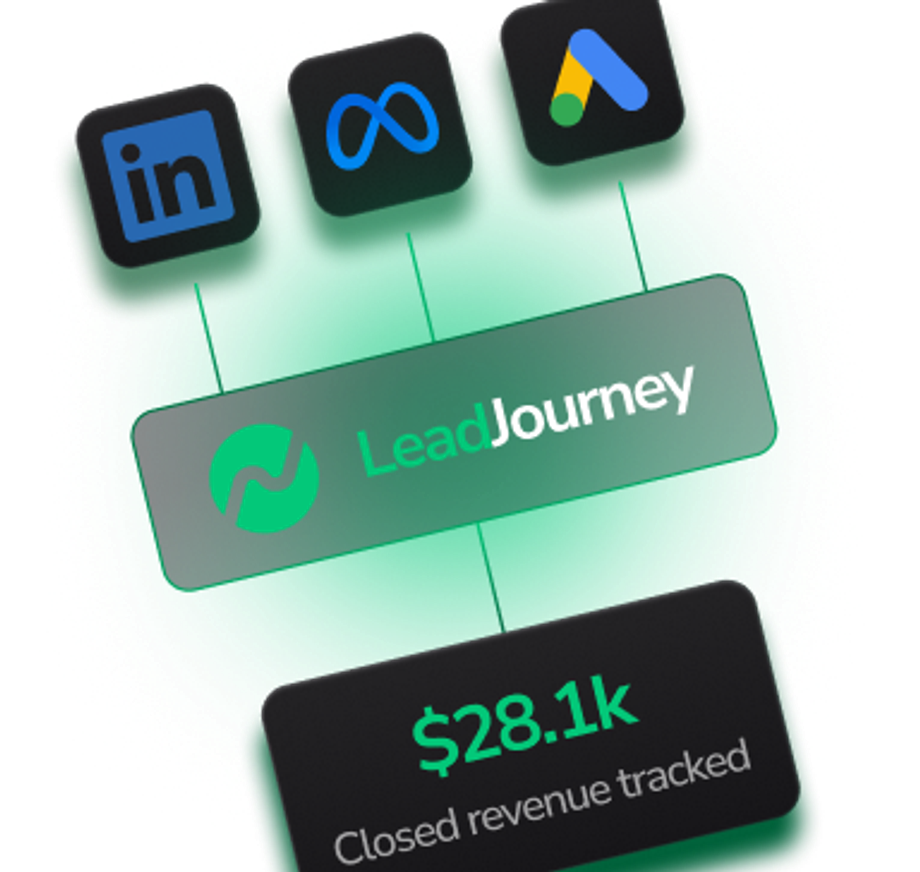
Multi-touch attribution is a measurement approach that distributes credit for a conversion across every marketing touchpoint a customer interacted with — not just the last click. Instead of giving 100% of the credit to whatever channel closed the deal, multi-touch attribution recognises that buyers usually engage with a brand multiple times before converting.
This matters most for businesses with longer buying cycles — B2B, coaching, consulting, high-ticket services — where a single buyer might see a LinkedIn ad, return organically a week later, click a Google retargeting ad, attend a webinar and then book a call months after the original ad click.
Why Multi-Touch Attribution Matters
Last-click attribution has a fundamental flaw: it credits 100% of every conversion to the final touchpoint, ignoring everything that happened before. If LinkedIn introduces 80% of your future customers but Google retargeting closes them, last-click data will tell you to cut LinkedIn and double down on Google. You will, and lead volume will dry up over the next quarter because you removed the channel that actually fills your pipeline.
Multi-touch attribution prevents this kind of mistake by showing the full influence of each channel — awareness, consideration and conversion — instead of crediting only the last step.
Common Multi-Touch Attribution Models
- Linear attribution: equal credit to every touchpoint in the journey. A useful baseline view, but treats minor and major influences identically.
- Time-decay attribution: more weight to recent touchpoints, less to early ones. Reflects that close-to-conversion interactions matter more — strong fit for B2B sales cycles.
- Position-based (U-shaped): more credit to first and last touchpoints, less to the middle. Good for crediting awareness and closing channels separately.
- Algorithmic / data-driven: distributes credit based on each touchpoint's actual contribution to conversion outcomes, derived from your own data. Most accurate but requires sufficient volume.
See every touchpoint that drives revenue
Track the full B2B journey across paid, organic and CRM — in one unified dashboard.
What Multi-Touch Attribution Requires
Three things have to work together for multi-touch attribution to be accurate: persistent click ID tracking that survives across sessions, devices and weeks; a CRM connection that maps deal stages back to original touchpoints; and a unified dashboard that shows every channel's contribution — paid, organic, social, email and content. Without all three, you are still guessing.
Multi-Touch vs. Single-Touch Attribution
Single-touch models (first-click, last-click) are simple but blind to multi-channel buying behaviour. Multi-touch models are more accurate but require more data infrastructure to capture every touchpoint reliably. For most lead generation businesses, the right answer is a multi-touch model with time-decay weighting — recent enough to reflect closing influence, broad enough to credit awareness work.
Conclusion
Multi-touch attribution is the only honest way to answer 'which channels actually drive our pipeline?' for businesses with longer buying cycles. It requires more setup than last-click — but the payoff is budget allocation that reflects how customers actually buy, instead of which channel happened to be in the right place at the moment of conversion.